Global Flavors Japanese Teriyaki Salmon
Highlighted under: International Flavor Classics
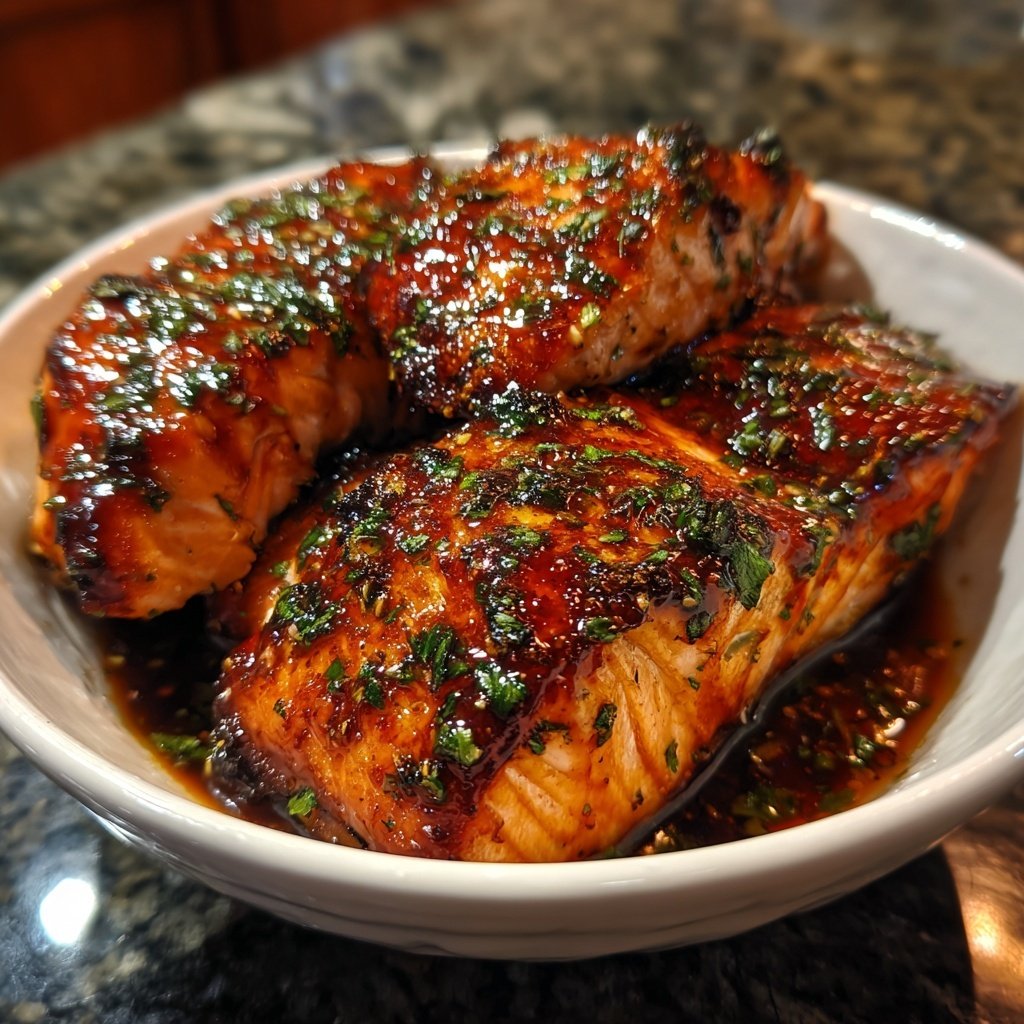
I am excited to share my recipe for Japanese Teriyaki Salmon, which has become a family favorite. The combination of sweet and savory flavors in the teriyaki sauce beautifully complements the salmon, creating a dish that is both satisfying and healthy. I've experimented with different marinades, but this one, with its balance of soy sauce and honey, truly stands out. Whether you're preparing a quick weeknight dinner or a special meal, this recipe is sure to impress anyone at your table.
During one of my culinary adventures, I delved deep into Japanese cuisine and discovered the joy of making my own teriyaki sauce. I learned that using fresh ingredients, like ginger and garlic, can elevate the flavors immensely. The method of marinating the salmon for even a short time really enhances the taste and tenderness.
I also found that broiling the salmon for just the right amount of time gives it a delicious caramelization, without drying it out. Serve it with steamed rice and vegetables, and you've got a meal that's packed with flavor and nutrients.
You Will Love This Recipe Because
- The irresistible balance of sweet and savory flavors
- Tender salmon infused with a homemade teriyaki glaze
- Quick to prepare, making it perfect for busy weeknights
Understanding Teriyaki Sauce
Teriyaki sauce is a harmonious blend of sweet and savory elements, which is essential for enhancing the rich flavor of salmon. The combination of soy sauce and honey creates the signature sweetness that characterizes teriyaki dishes. Using fresh ingredients like grated ginger and minced garlic in the sauce not only adds aroma but also provides a depth of flavor. If you prefer a spicier kick, consider a dash of sriracha or red pepper flakes, which can easily be whisked into the sauce for a delightful contrast.
The thickening agent in teriyaki sauce is key to achieving that sticky, glaze-like consistency that coats the salmon beautifully. Mixing cornstarch with water before adding it to the sauce prevents clumping and ensures a smooth texture. Once heated over medium heat, you'll know it's ready when the sauce turns glossy and thick enough to cling to the back of a spoon. Be mindful to stir continuously to prevent scorching, especially as it nears the desired thickness.
Perfectly Cooking Salmon
When cooking salmon, starting with a pre-heated skillet is crucial. This helps to achieve that desirable crispiness on the skin while keeping the flesh moist and tender. Use sesame oil not only for its flavor but also for its high smoke point, which makes it ideal for searing. Place the fish skin-side down gently in the pan to avoid any splatter, and let it cook undisturbed for the first few minutes to develop a golden crust. You can gently lift the edge to check for doneness; it should come away easily when flipped.
The timing is essential for perfectly cooked salmon. Cook the salmon on the skin side for about 4-5 minutes before flipping, then reduce the heat slightly to avoid burning while you baste. The inside should reach an internal temperature of 145°F. If the salmon appears slightly translucent in the center, it will continue to cook off the heat, so don’t worry if it seems slightly underdone when you take it off the stove.
Serving Suggestions
Pairing your teriyaki salmon with sides that complement its rich flavors can elevate the dining experience. Steamed vegetables like broccoli, snap peas, or bok choy add color and crunch, creating a fresh contrast to the salmon's texture. Consider adding a side of jasmine rice or sushi rice, which can soak up the extra teriyaki sauce, enhancing every bite. For added flavor, you can infuse the rice with a bit of rice vinegar or sesame oil while cooking.
For a more flavor-packed experience, consider serving the salmon over a bed of quinoa or farro, which not only adds a nutty taste but also boosts the dish's nutritional content. Garnishing with fresh herbs like cilantro or additional chopped green onions can impart an aromatic freshness. You can even squeeze a little lime juice over the dish just before serving for a zesty brightness that will enhance the overall flavors.
Ingredients
Gather these fresh ingredients to make the best teriyaki salmon.
For the Teriyaki Sauce
- 1/4 cup soy sauce
- 2 tablespoons honey
- 1 tablespoon rice vinegar
- 1 teaspoon grated ginger
- 1 teaspoon minced garlic
- 1 tablespoon cornstarch mixed with 2 tablespoons water
For the Salmon
- 4 salmon fillets (6 oz each)
- 1 tablespoon sesame oil
- Chopped green onions and sesame seeds for garnish
Ensure all your ingredients are fresh for maximum flavor.
Instructions
Follow these simple steps to create the perfect teriyaki salmon.
Prepare the Teriyaki Sauce
In a small bowl, whisk together the soy sauce, honey, rice vinegar, grated ginger, and minced garlic. In another bowl, mix the cornstarch with water until smooth, then add it to the sauce mixture. Heat the mixture in a saucepan over medium heat until it thickens. Set aside.
Marinate the Salmon
Place the salmon fillets in a shallow dish and pour half of the teriyaki sauce over them. Let them marinate for at least 10 minutes.
Cook the Salmon
In a large skillet, heat sesame oil over medium-high heat. Add the marinated salmon, skin-side down, and cook for 4-5 minutes. Turn and cook for another 3-4 minutes, basting with the remaining teriyaki sauce until the salmon is cooked through.
Serve
Remove the salmon from the skillet and let it rest for a couple of minutes. Serve with rice and steamed vegetables, garnished with chopped green onions and sesame seeds.
Enjoy your homemade teriyaki salmon!
Pro Tips
- For an extra layer of flavor, you can grill the salmon instead of pan-searing it. Also, adjust the sweetness of the sauce to your taste by adding more or less honey.
Storage and Reheating
If you have any leftover teriyaki salmon, store it in an airtight container in the refrigerator for up to three days. To maintain its texture, gently reheat the salmon in a skillet over low heat, adding a splash of water or broth to prevent drying out. Covering the skillet can help retain moisture while reheating. Avoid using the microwave for reheating, as it can lead to uneven heating and toughening of the fish.
The teriyaki sauce itself can be made in advance and stored in the refrigerator for up to a week. This makes it a convenient option for meal prep. When ready to use, reheat the sauce gently on the stove, stirring consistently to achieve the right consistency. This can save time during the week, allowing you to prepare a quick and flavorful meal in no time.
Variations on Teriyaki Salmon
One delightful variation to this recipe is to incorporate fruits like pineapple or mango into the dish. These fruits can be grilled alongside the salmon, adding a touch of caramelization and enhancing the overall sweetness. You could also make a pineapple teriyaki glaze by pureeing fresh pineapple and adding it to the sauce for an exciting tropical twist.
For a different protein alternative, try using chicken or firm tofu. Both can be marinated and cooked similarly to the salmon. Tofu absorbs flavors well from the teriyaki sauce, making it an excellent vegetarian option. Depending on the protein you choose, you might need to adjust the cooking times; for instance, chicken requires a longer cooking time to ensure it is fully cooked through.
Questions About Recipes
→ Can I use another fish instead of salmon?
Yes, you can substitute salmon with other fish like trout or tuna, but cooking times may vary.
→ How can I make this recipe gluten-free?
Use tamari sauce instead of regular soy sauce, and ensure that all other ingredients are gluten-free.
→ Can I prepare the teriyaki sauce in advance?
Absolutely! You can make the teriyaki sauce ahead of time and store it in the refrigerator for up to a week.
→ What can I serve with teriyaki salmon?
Steamed rice and stir-fried vegetables are great accompaniments, but you can also serve it with quinoa or a fresh salad.
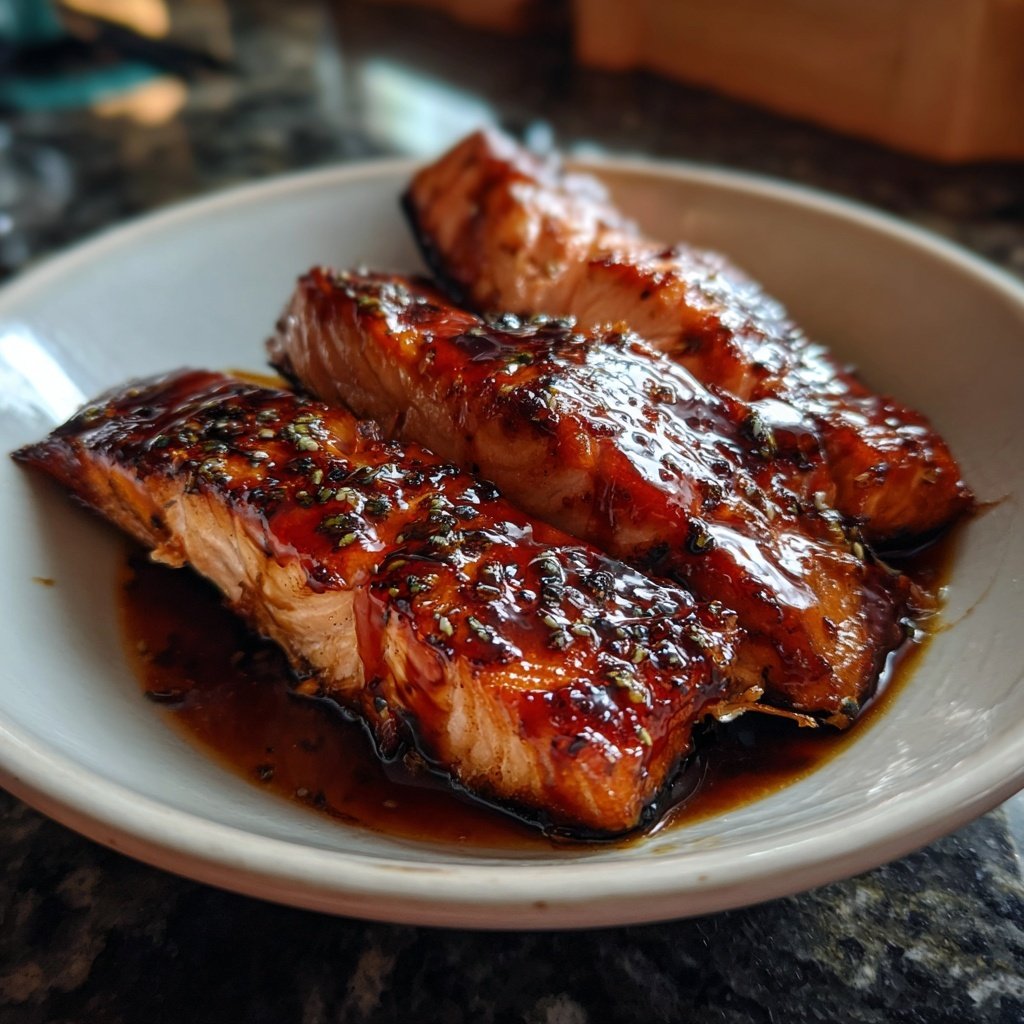
Global Flavors Japanese Teriyaki Salmon
Created by: Ainsley Harper
Recipe Type: International Flavor Classics
Skill Level: Intermediate
Final Quantity: 4 servings
What You'll Need
For the Teriyaki Sauce
- 1/4 cup soy sauce
- 2 tablespoons honey
- 1 tablespoon rice vinegar
- 1 teaspoon grated ginger
- 1 teaspoon minced garlic
- 1 tablespoon cornstarch mixed with 2 tablespoons water
For the Salmon
- 4 salmon fillets (6 oz each)
- 1 tablespoon sesame oil
- Chopped green onions and sesame seeds for garnish
How-To Steps
In a small bowl, whisk together the soy sauce, honey, rice vinegar, grated ginger, and minced garlic. In another bowl, mix the cornstarch with water until smooth, then add it to the sauce mixture. Heat the mixture in a saucepan over medium heat until it thickens. Set aside.
Place the salmon fillets in a shallow dish and pour half of the teriyaki sauce over them. Let them marinate for at least 10 minutes.
In a large skillet, heat sesame oil over medium-high heat. Add the marinated salmon, skin-side down, and cook for 4-5 minutes. Turn and cook for another 3-4 minutes, basting with the remaining teriyaki sauce until the salmon is cooked through.
Remove the salmon from the skillet and let it rest for a couple of minutes. Serve with rice and steamed vegetables, garnished with chopped green onions and sesame seeds.
Extra Tips
- For an extra layer of flavor, you can grill the salmon instead of pan-searing it. Also, adjust the sweetness of the sauce to your taste by adding more or less honey.
Nutritional Breakdown (Per Serving)
- Calories: 300 kcal
- Total Fat: 18g
- Saturated Fat: 3g
- Cholesterol: 70mg
- Sodium: 600mg
- Total Carbohydrates: 14g
- Dietary Fiber: 1g
- Sugars: 8g
- Protein: 24g